
Scheduler
The scheduler broadcasts an uploaded video to selected channels. First connect channels and wait for your file to finish processing in My videos. Uploading requires a paid restream plan.
Schedule a broadcast
Open Scheduler in the left menu and click Schedule. Select one or more Channels for broadcasting. If no channels exist, connect one first: the scheduling form appears after a channel is available.
Choose the Start date/time and confirm it in the calendar. The field shows a UTC offset: check it when scheduling from another device or country.
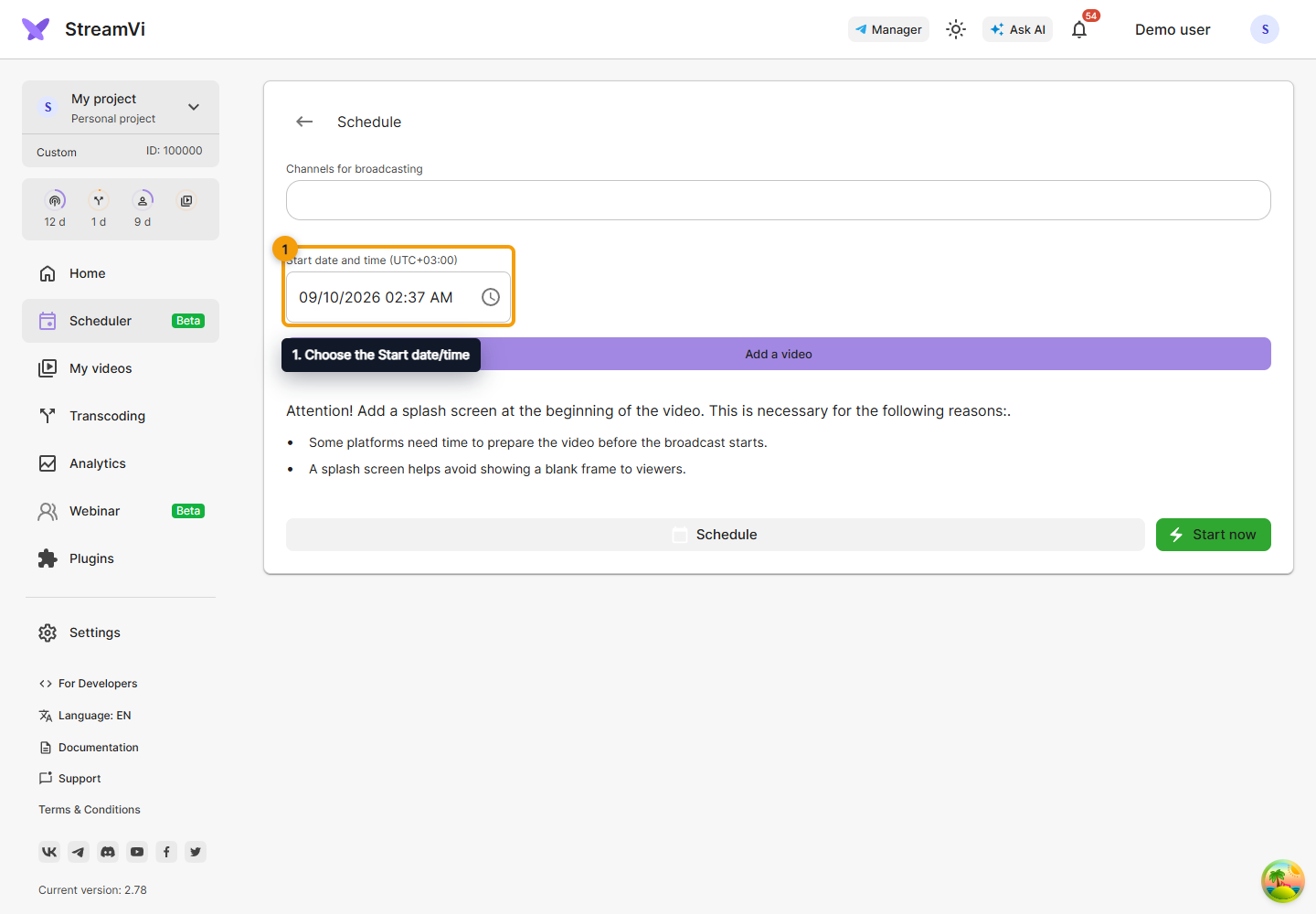
Click Add a video and select a processed file. The minimum duration is 2 minutes. The end time is calculated from the file duration; this form has no separate end-time field. Changing the start time recalculates the end time.
Click Schedule. A successful save returns you to the schedule list. Include an opening slate in the video itself: platforms may need time to prepare the broadcast, and the slate helps avoid a blank opening frame.
Start now
Select the same channel and video fields, then click Start now for an immediate broadcast. This action starts streaming immediately. Use Schedule for a future start.
Edit or stop
Click an entry in the schedule list to open its editing form. Edit its channels, time or video, then click Save. To replace the selected video, remove it from the form and click Add a video again; this does not delete the original file from storage.
Available actions depend on the entry's state. Deleting an entry and stopping a live broadcast require confirmation. Playback progress and a stop action also appear on the main broadcast page while the file is streaming.
The current form has no recurring-schedule setting. Create a separate entry for another start time. If the service reports an error, check the channel, file, time and plan; a failed request does not mean the schedule was saved.
The StreamVi scheduler and a scheduled YouTube broadcast are separate settings: the former starts a file, while the latter selects the destination event on the platform.